
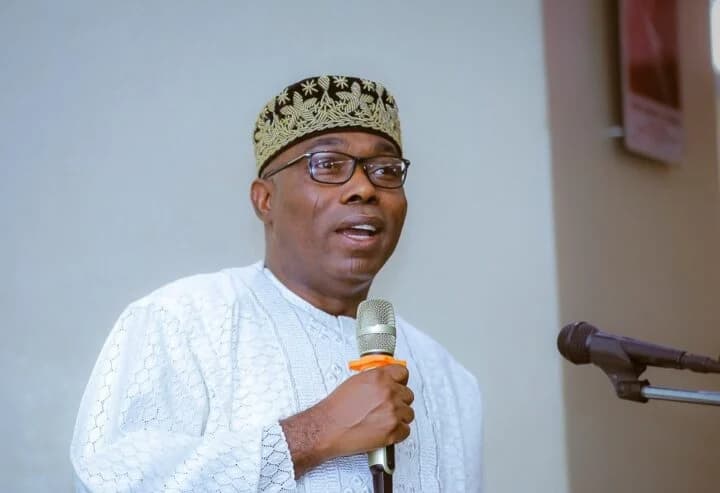
Social Democratic Party presidential candidate Adewole Adebayo has promised to install solar power systems on the rooftops of Nigerians within 11 months if elected president in the 2027 general election. Adebayo made the pledge on Tuesday during an interview on Arise Television’s Prime Time, where he outlined his plan for addressing Nigeria’s persistent electricity challenges. […]
Social Democratic Party presidential candidate Adewole Adebayo has promised to install solar power systems on the rooftops of Nigerians within 11 months if elected president in the 2027 general election.
Adebayo made the pledge on Tuesday during an interview on Arise Television’s Prime Time, where he outlined his plan for addressing Nigeria’s persistent electricity challenges.
He said his proposed system would provide between 11 and 15 kilowatts of solar power to every Nigerian household, describing decentralised solar energy as a more practical alternative to costly conventional electrification projects.
The SDP candidate criticised previous rural electrification policies that focused on extending 33kVA electricity lines, arguing that Nigeria could achieve faster and broader access to power by taking electricity generation directly to homes.
He proposed that the country should begin producing solar panels locally instead of relying heavily on imported equipment, while communities would be trained to install and maintain the systems.
Adebayo said the approach would help Nigeria expand electricity access without depending entirely on the national grid, which has continued to face challenges in meeting the country’s growing energy needs.
“Between 11 and 15 kW of solar power will be put on every roof within 11 months of my presidency,” he said, setting an aggressive timeline for implementing his proposed energy policy.
The presidential candidate also referred to an earlier intervention he made during the administration of former President Olusegun Obasanjo in 2001, saying he had recommended the establishment of a solar panel manufacturing factory in Nigeria.
He said he had advised the government to enter into an agreement with China or India, manufacture solar panels locally and train Nigerians to handle their installation.
According to him, local governments could provide funding for the programme, although he alleged that money available to them was being diverted instead of being invested in development projects.
“Every Local Government Area has money that they steal every month to capitalise on this,” Adebayo alleged.
The proposal comes as electricity remains one of the major concerns confronting Nigerian households and businesses, with unreliable supply and high alternative energy costs continuing to affect economic activity.
Adebayo’s solar plan forms part of his broader campaign message ahead of the 2027 election, as he positions the SDP as an alternative to the policies of the current administration.
The latest pledge is also likely to attract attention because of its ambitious timeline, with Adebayo promising nationwide rooftop solar deployment less than a year after assuming office.