
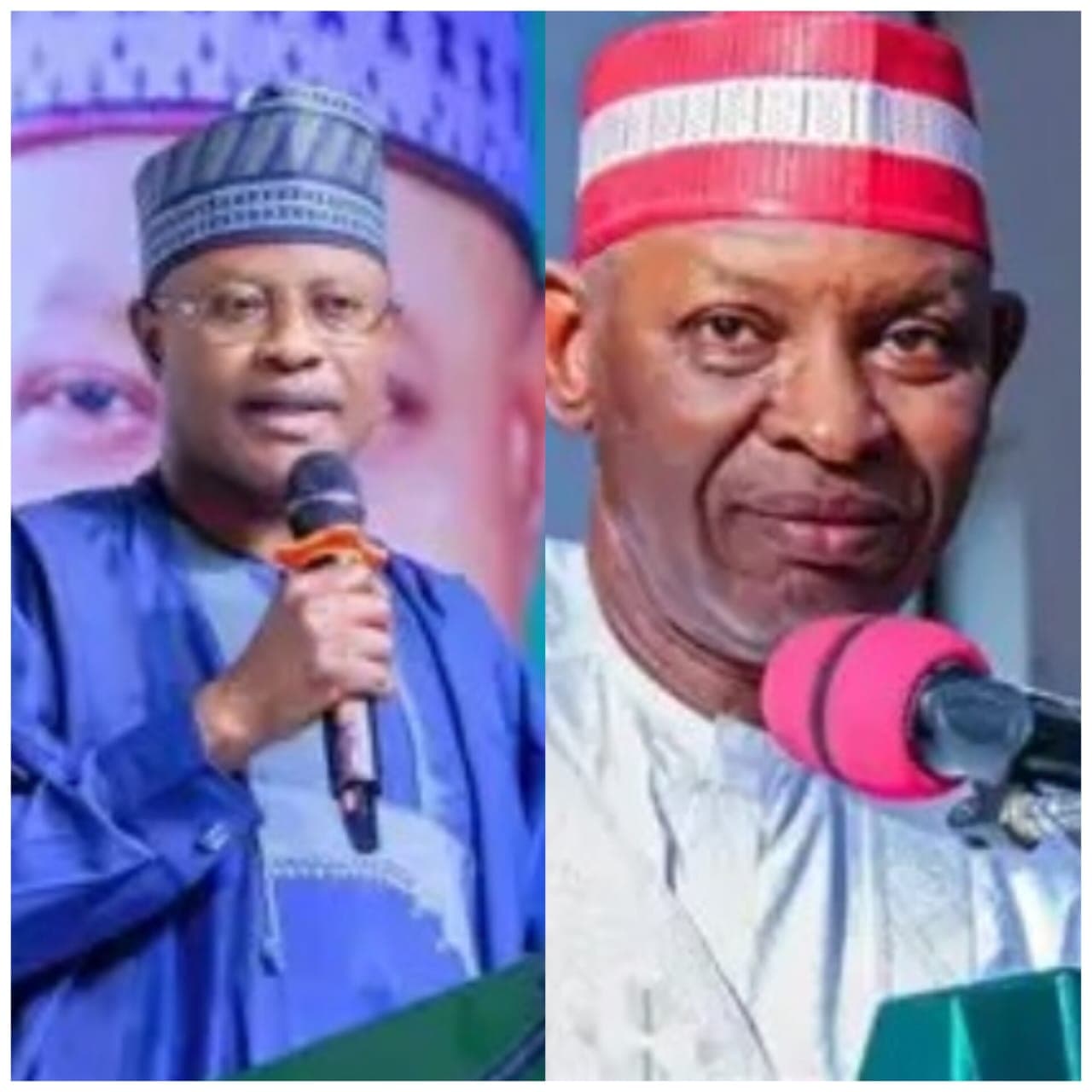
Kano State Governor Abba Kabir Yusuf and his Kaduna counterpart, Uba Sani, have urged journalists to strengthen fact-checking, promote responsible reporting and guard against hate speech as Nigeria prepares for the 2027 general elections. The governors made the appeal at the Abuja launch of Digital Shift in Nigeria’s Newspaper Industry, a book written by Leadership […]
Kano State Governor Abba Kabir Yusuf and his Kaduna counterpart, Uba Sani, have urged journalists to strengthen fact-checking, promote responsible reporting and guard against hate speech as Nigeria prepares for the 2027 general elections.
The governors made the appeal at the Abuja launch of Digital Shift in Nigeria’s Newspaper Industry, a book written by Leadership Newspapers Group News Editor, Sunday Isuwa.
Media professionals and other stakeholders at the event also called for stronger safeguards against misinformation and clear newsroom policies on the use of artificial intelligence in election coverage.
Yusuf, who was represented by the Kano State Commissioner for Information and Internal Affairs, Ibrahim Waiya, raised concerns about the growing use of hate speech and personal attacks during political campaigns.
He warned that the trend was harmful to democratic practice, insisting that political actors should concentrate on presenting their policies and ideas instead of attacking opponents personally.
The governor described the growing resort to abusive campaign language as a worrying development that could affect the quality of political engagement in the country.
Governor Sani also urged journalists to approach election reporting with greater responsibility. Represented by Kaduna State Commissioner for Information, Alhaji Ahmed Maiyaki, he said reporters must investigate political claims and establish the facts before publishing them.
He maintained that election coverage should contribute to democracy and national stability, rather than focus solely on campaign activities and political events.
Earlier, Archbishop Sunday Onuoha, President of Vision Africa and former Special Assistant to President Olusegun Obasanjo on Privatisation, called for formal newsroom rules to guide the use of artificial intelligence.
Onuoha, represented by Methodist Bishop of Kubwa Diocese, Bishop Frederick Onoja, proposed that media organisations establish dedicated election verification teams ahead of the campaign period.
He also encouraged newsrooms to work with reputable fact-checking organisations and provide specialised training for political journalists in digital investigations, electoral law, AI detection, data journalism and conflict-sensitive reporting.
The author, Isuwa, warned that the speed of digital publishing should not come at the expense of accuracy, fairness and professional standards.
He noted that although digital tools had created new opportunities for journalism, technology could not replace ethical practice, careful verification and the responsibility to serve the public.
The book explores how digital platforms have changed the way news is produced, distributed and consumed, while encouraging journalists and readers to adapt to the changing media environment.
The discussion comes as AI-generated false content continues to spread across social media ahead of the January 16, 2027 presidential election, raising concerns about the role of journalists in identifying and challenging misleading information.