
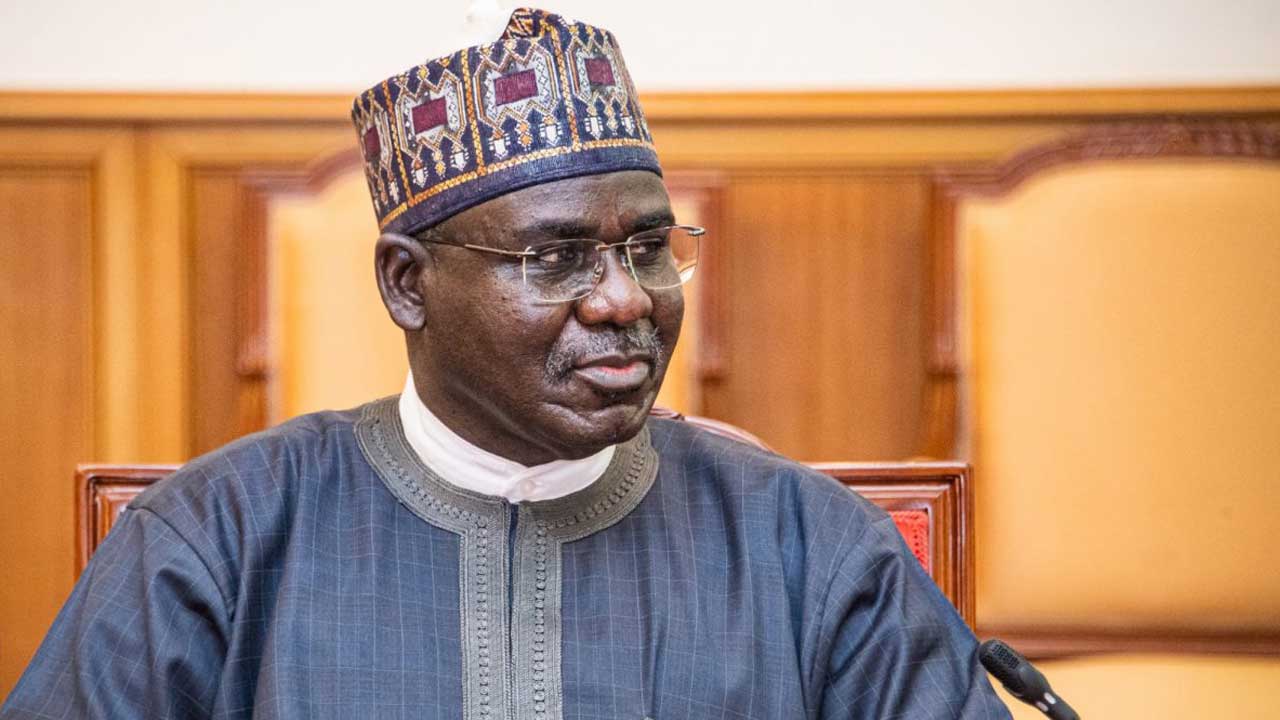
Nigeria’s former Chief of Army Staff, Lieutenant General Tukur Buratai (retd.) has called for an emergency intervention to tackle poverty in Northern Nigeria, arguing that unemployment, illiteracy and poor governance are creating conditions that terrorist groups exploit to recruit young people. He made the recommendation in Lagos on Friday at the unveiling of Beyond Military […]
Nigeria’s former Chief of Army Staff, Lieutenant General Tukur Buratai (retd.) has called for an emergency intervention to tackle poverty in Northern Nigeria, arguing that unemployment, illiteracy and poor governance are creating conditions that terrorist groups exploit to recruit young people.
He made the recommendation in Lagos on Friday at the unveiling of Beyond Military Force: A Strategy for Countering Terrorism in Nigeria, written by Dr Joan Mbagwu, a professor of Peace, Criminology and Security Studies at Chrisland University, Ogun State.
Buratai, who served as Chief of Army Staff between 2015 and 2021, said the country needed a broader approach to insecurity rather than depending mainly on military action. He identified unemployment, poverty, illiteracy and weak governance as factors that expose disadvantaged young people to extremist recruitment.
The retired military officer explained that although armed operations could weaken terrorist organisations, they could not resolve the grievances and hardship that make individuals vulnerable to manipulation. He maintained that military intervention must be supported by effective governance and social development.
He also highlighted the importance of cooperation between security agencies and local communities, describing residents as a valuable source of intelligence. According to him, communities are more likely to provide useful information when they trust the agencies responsible for protecting them.
The former army chief warned that violations of human rights during security operations could damage that trust and give extremist groups opportunities to influence public opinion. He said the conduct of security personnel was just as important as the operations themselves in determining whether counter-terrorism efforts would succeed.
Buratai further argued that the Nigeria Police Force needed stronger capacity to handle civilian security responsibilities. He cautioned against the continued deployment of the military to perform duties meant for other government institutions, saying the practice could overstretch the armed forces without resolving the root causes of conflicts.
He also addressed the rehabilitation of former terrorists, supporting properly managed deradicalisation programmes while stressing that victims of terrorism must not be forgotten. He called for transparent reintegration processes that would protect affected communities and ensure that justice was not compromised.
Speaking on the international dimension of the crisis, Buratai advocated stronger cooperation between Nigeria and neighbouring countries. Citing his experience with the Multinational Joint Task Force headquartered in Chad, he said groups such as Boko Haram operate across borders, making regional collaboration through ECOWAS, the African Union and the Lake Chad Basin particularly important.
He said an emergency poverty programme should focus on children excluded from education, the Almajiri system, unemployment among young people, vocational skills and social protection. Buratai also warned that poverty reduction initiatives must be protected from political interference and personal exploitation.
The author, Mbagwu, said her book was intended to challenge the overreliance on military force in counter-terrorism. She argued that understanding the conditions that allow extremist ideologies to spread was necessary for developing a more sustainable security strategy.