
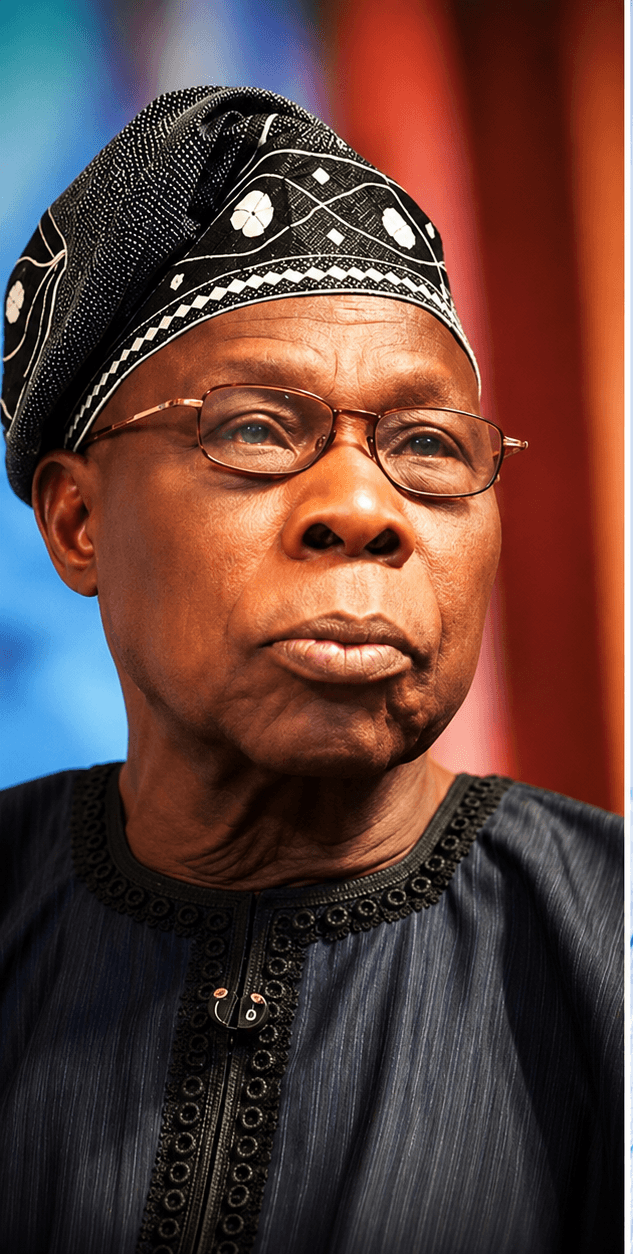
Former President Olusegun Obasanjo has said corruption continues to undermine national development, warning that poor Nigerians bear the greatest burden when illicit wealth is allowed to flourish. He made the remarks at the launch of Unexplained Wealth: A Trilogy of Nigerian Financial Law, written by Senior Advocate of Nigeria, Dr Wahab Shittu, at the Oriental […]
Former President Olusegun Obasanjo has said corruption continues to undermine national development, warning that poor Nigerians bear the greatest burden when illicit wealth is allowed to flourish.
He made the remarks at the launch of Unexplained Wealth: A Trilogy of Nigerian Financial Law, written by Senior Advocate of Nigeria, Dr Wahab Shittu, at the Oriental Hotel in Lagos.
Obasanjo, who chaired the event, said corruption was fundamentally incompatible with development and described it as harmful to countries and other human organisations.
The former President traced his anti-corruption involvement to his years in the military, when he worked as a prosecutor under military law and participated in a court-martial involving corruption.
He also recounted how his interest in the issue deepened after Peter Eigen, a former World Bank official, approached him about joining the fight against corruption.
According to Obasanjo, Eigen’s experience at the World Bank exposed him to cases involving the diversion of funds from loans granted to countries, leading to the establishment of Transparency International.
Obasanjo said he later served as chairman of the organisation’s Advisory Council, while Eigen served as chairman, as they sought support for their global anti-corruption campaign.
He recalled that they approached former World Bank president Bob McNamara, who initially described their effort as an attempt to do the impossible but later promised moral and financial support if they could demonstrate results.
Obasanjo said the campaign subsequently took them across Latin America, Asia and Africa, while one of their early objectives was to persuade the OECD to stop allowing bribe payments to be treated as tax-deductible expenses.
He said the OECD eventually abolished the practice after almost three years of campaigning, describing the outcome as an important milestone for Transparency International.
Turning to Nigeria, Obasanjo recalled his administration’s role in establishing the ICPC, saying a model law obtained from Transparency International became the foundation for the legislation.
He also said the establishment of the EFCC was intended to strengthen the country’s institutional response to financial crimes.
The former President urged Nigeria to strengthen its laws and institutions, arguing that while no country has completely eliminated corruption, governments can prevent it from becoming deeply entrenched.
Sanusi, who also spoke at the event, said laws targeting unexplained wealth must be accompanied by political and judicial reforms to ensure fair and transparent enforcement.
He warned that anti-corruption measures could be undermined if their application depended on political affiliation or connections.
Ipaye, representing former Vice President Yemi Osinbajo, called for a system that can recover stolen assets while protecting wealth that was acquired legitimately and lawfully.
Fagbohun also urged caution in the enforcement of unexplained wealth laws, saying a lack of conventional documentation should not automatically be interpreted as proof of criminal conduct.
Shittu said his trilogy was designed to help create a framework for distinguishing legitimate wealth from illicit enrichment, stressing that the objective should be to establish wrongdoing rather than presume guilt.