
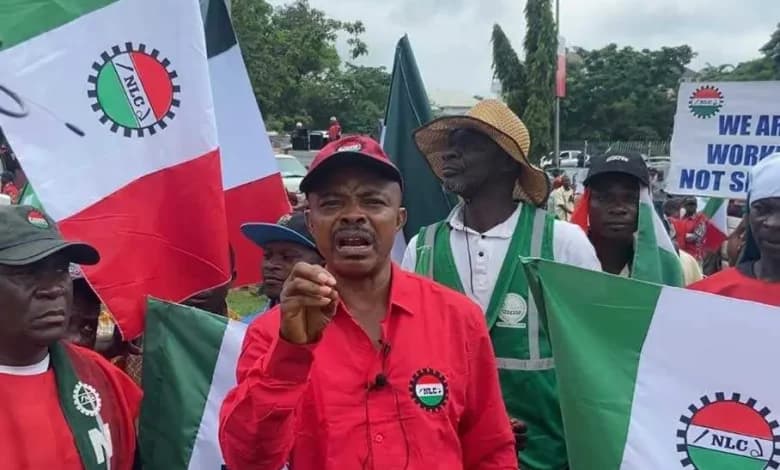
The Nigeria Labour Congress (NLC) has issued a two-week ultimatum to the Federal Government, demanding lower petrol prices, the reopening of minimum wage negotiations and the implementation of outstanding agreements with workers. The union said the deadline begins on Friday, October 9, warning that the government’s failure to address its demands within the period would […]
The Nigeria Labour Congress (NLC) has issued a two-week ultimatum to the Federal Government, demanding lower petrol prices, the reopening of minimum wage negotiations and the implementation of outstanding agreements with workers.
The union said the deadline begins on Friday, October 9, warning that the government’s failure to address its demands within the period would force it to consider further steps through its relevant organs.
The decision followed a joint meeting of the NLC’s National Executive Council and Central Working Committee at the Olaitan Oyerinde Hall, Labour House, Abuja, on Wednesday.
In a communiqué signed by NLC President Joe Ajaero, the labour centre expressed concern over the economic pressures confronting Nigerian workers and the broader population.
The union blamed the worsening hardship on economic conditions that have weakened workers’ purchasing power, including rising inflation, pressure on the naira and the increasing cost of essential goods and services.
It also criticised what it described as the government’s failure to adequately address the suffering of ordinary Nigerians, arguing that workers should not continue to bear the burden of economic difficulties without corresponding relief.
Workers Seek Review Of N70,000 Minimum Wage
The NLC is demanding that the Federal Government begin renegotiating the national minimum wage before the end of October.
The union argued that the current N70,000 monthly minimum wage has become increasingly inadequate because of rising living costs and the declining value of earnings.
It said workers are struggling to meet basic expenses, including food, housing, healthcare, transportation and education, despite their continued efforts to cope with prevailing economic conditions.
The labour centre is therefore seeking a living wage that reflects the actual cost of living and preserves the dignity of Nigerian workers.
It warned that any further delay in commencing the negotiations would be unacceptable, given the financial challenges confronting workers and their families.
NLC Wants Petrol Prices Returned To 2024 Levels
Another major demand is a reduction in petrol prices nationwide to the levels prevailing when the current national minimum wage was signed in 2024.
The NLC argued that high fuel prices have intensified economic hardship by driving up transportation costs and contributing to increases in food prices and other essential goods.
Petrol currently sells for about N1,330 per litre or more in major cities, while consumers in some remote areas reportedly pay even higher prices.
The union said the situation has placed additional pressure on household budgets and made it more difficult for workers to cope with their existing incomes.
It urged the Federal Government to intervene to cushion the effects of high energy costs, arguing that workers and other Nigerians should not continue to bear the burden without adequate relief.
The NLC also alleged that the prevailing situation had enriched a handful of oil marketers while worsening the financial difficulties faced by the wider population.
The union’s demands extend beyond fuel prices and minimum wage negotiations.
It is seeking tax relief for workers in accordance with agreements reached with the government, alongside the immediate payment of outstanding wage awards.
According to the NLC, these measures represent the minimum assistance required to ease workers’ hardship and restore some dignity to their lives.
The labour centre maintained that the government must honour its commitments rather than continue to demand sacrifices from workers without providing the relief previously agreed upon.
The NLC is also demanding the implementation of the Terms of Settlement reached with the Joint Health Sector Unions and the Assembly of Healthcare Professionals on February 5, 2026.
It further wants the Federal Government to implement the demands of the Joint Public Sector Negotiating Council.
The union warned that failure to address its demands within two weeks would leave it with no option but to consider remedial measures as directed by its relevant organs.
Although it did not announce a specific strike date or outline the exact form of action under consideration, the NLC urged its affiliate unions and progressive allies to remain prepared.
The labour centre described the struggle as part of its responsibility to resist exploitation and policies it considers harmful to workers and the wider population.
It called on Nigerian workers to remain united, organised and determined in pressing for economic relief and a fairer society.