
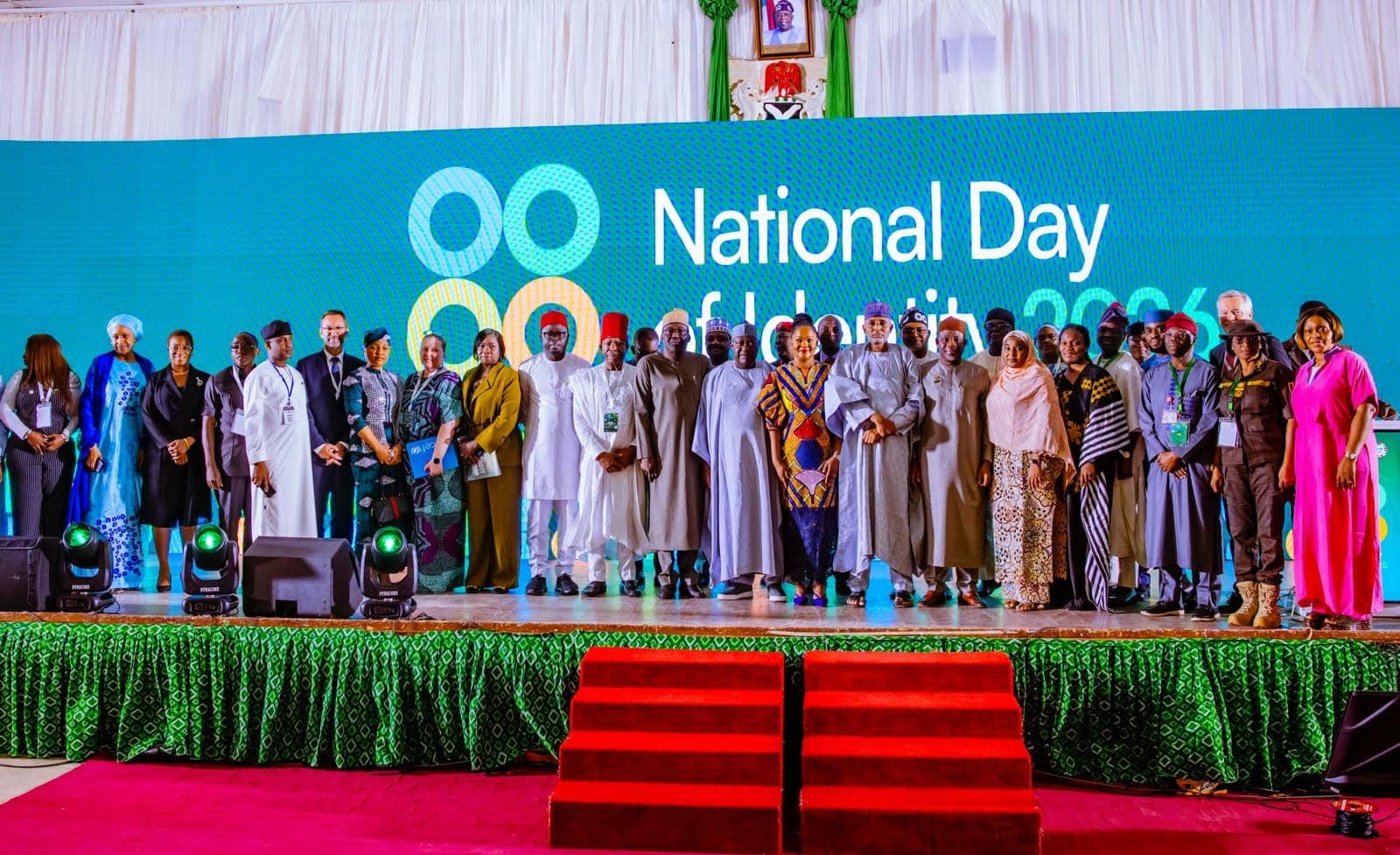
President Bola Tinubu has ordered state governments and Ministries, Departments and Agencies to implement Nigeria’s National Policy and National Action Plan for the Elimination of Child Labour, 2026–2030. The directive was issued on Wednesday during a national dialogue on the implementation of the new child labour policy and action plan held in Abuja. Represented at […]
President Bola Tinubu has ordered state governments and Ministries, Departments and Agencies to implement Nigeria’s National Policy and National Action Plan for the Elimination of Child Labour, 2026–2030.
The directive was issued on Wednesday during a national dialogue on the implementation of the new child labour policy and action plan held in Abuja.
Represented at the event by SGF George Akume, Tinubu also unveiled the 2024 National Child Labour Survey Report and formally launched the five-year plan for tackling child labour across the country.
The President said the issue should be viewed beyond the labour sector because child labour has implications for children’s education, household poverty, economic development, food security and national security.
He said children who are forced into work at the expense of their education are denied opportunities that could help them develop and contribute meaningfully to the country in the future.
To address the problem, Tinubu said the Federal Government would strengthen labour inspection and administration, improve child protection systems and tackle some of the economic and social conditions that expose children to exploitation.
He listed poverty, unemployment, limited access to quality education and social exclusion among the factors that can push children into labour.
The President said education remains an important safeguard, noting that government programmes are targeting out-of-school children, improving education data, developing teachers and expanding skills acquisition.
He also highlighted the National Home-Grown School Feeding Programme, saying it could encourage school attendance while providing nutritional support to children from vulnerable households.
Tinubu said social protection initiatives such as NG-CARES Additional Financing and the HOPE Programme were also intended to strengthen families economically and create opportunities for parents and caregivers.
According to him, improving household livelihoods would help reduce situations in which children are compelled to work because of financial hardship at home.
The President recalled the launch of the National Plan of Action on Ending Violence Against Children in Nigeria in 2025 and said the government would continue efforts to strengthen enforcement of the Child Rights Act and other child protection legislation.
He also said steps were being taken to improve safety in schools, particularly in communities facing heightened security risks.
Tinubu urged governors and their spouses to take an active role in promoting child protection initiatives and called on employers to ensure their supply chains do not involve child labour.
He also sought the support of labour unions, development partners, traditional rulers, religious leaders, communities, parents and guardians in implementing the new plan.
The President noted that Nigeria’s status as an Alliance 8.7 Pathfinder Country comes with a responsibility to demonstrate tangible progress in the fight against child labour.
He said the 2026–2030 policy and action plan would provide a framework for turning Nigeria’s commitments into concrete measures and urged stakeholders to move from promises to implementation.
Tinubu said every Nigerian child should be able to attend school, receive protection and enjoy a childhood free from exploitation.