President Bola Tinubu has renewed Nigeria’s call for major reforms of the United Nations Security Council, demanding at least two permanent seats for Africa with veto powers and five additional non-permanent seats. The President made the demand during his address to the 81st session of the United Nations General Assembly in New York, with Vice […]
President Bola Tinubu has renewed Nigeria’s call for major reforms of the United Nations Security Council, demanding at least two permanent seats for Africa with veto powers and five additional non-permanent seats.
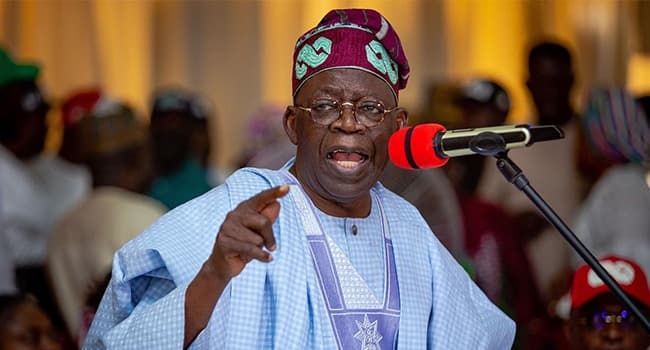
The President made the demand during his address to the 81st session of the United Nations General Assembly in New York, with Vice President Kashim Shettima delivering the speech on his behalf.
Tinubu argued that the current composition of the Security Council does not reflect the distribution of global power in 2026 and said reform should begin with restructuring the Council.
He maintained that Africa should no longer remain outside permanent membership while continuing to contribute to international peace, security and development.
Nigeria’s proposal follows the African Union’s established position under the Ezulwini Consensus and Sirte Declaration. The African position calls for at least two permanent seats and five non-permanent seats, with full privileges for the permanent members, including veto power if the veto is retained.
Tinubu said Nigeria was ready to assume greater responsibilities in international peace and security, citing its past peacekeeping and mediation efforts across the continent.
He referenced Nigeria’s involvement in Liberia, Sierra Leone, Darfur, Mali and The Gambia, alongside its continuing efforts through ECOWAS, the African Union and Gulf of Guinea partnerships.
Beyond Security Council reform, the President addressed climate change and development, saying developing countries should not be forced to choose between economic growth and environmental responsibility.
He called for technology transfer, capacity building and climate finance to support developing countries seeking to industrialise, expand energy access and reduce emissions.
Tinubu said Nigeria remained committed to its Energy Transition Plan, which targets net-zero emissions by 2060 while seeking to expand access to affordable and reliable energy.
The President said renewable energy, clean cooking, transitional use of gas, climate-smart agriculture and nature-based solutions would form part of Nigeria’s approach to the energy transition.
He also urged a different approach to international climate financing, calling for funding arrangements based on equity and shared responsibility rather than charity.
On artificial intelligence, Tinubu urged countries to focus on responsible use of the technology, noting its potential applications in healthcare, education, agriculture, governance and productivity.
He said Nigeria was building digital public infrastructure and expanding broadband, innovation, research and technology entrepreneurship, while inviting international partners to collaborate with Nigerian youths.
Tinubu also called for reforms to the international financial system, saying developing countries require greater access to concessional financing and debt frameworks that recognise their development needs.
He identified the African Continental Free Trade Area as an important platform for expanding regional value chains, increasing intra-African trade and supporting industrialisation.
According to the President, Africa should increasingly transform its natural resources locally through manufacturing, value addition, technology and knowledge-based industries rather than relying primarily on raw-material exports.
On terrorism and insecurity, Tinubu said Nigeria’s experience fighting Boko Haram, ISWAP and other armed groups demonstrated that military victories must be supported by education, economic opportunities, accountable governance and protection of communities.
He called for increased international cooperation against terrorism, organised crime, cyberattacks and illicit finance, while urging diplomatic solutions to conflicts including the crisis in Sudan.
Tinubu reaffirmed Nigeria’s commitment to peaceful dispute resolution and called for stronger peacekeeping, mediation, peacebuilding and institution-building efforts.
The President’s demand comes amid broader discussions over Security Council reform. Guterres has also argued that the UN needs to better reflect current geopolitical realities, while African states continue to press for permanent representation.
The Security Council currently comprises 15 members, five of whom; China, France, Russia, the United Kingdom and the United States are permanent members with veto powers.
Tinubu ended his address by reaffirming Nigeria’s support for international cooperation and dialogue, saying the UN must evolve if it is to remain effective in addressing global challenges