
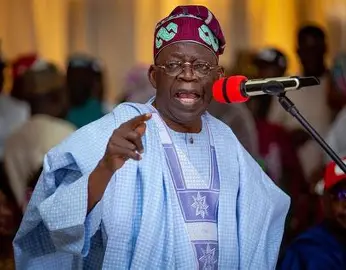
Former Kaduna Central Senator Shehu Sani has urged northern politicians to shelve their presidential ambitions until 2031, warning that a renewed struggle for power in 2027 could trigger fresh separatist agitations across southern Nigeria. Sani made the appeal during an interview with journalists in Kaduna on Friday, insisting that President Bola Tinubu should complete the […]
Former Kaduna Central Senator Shehu Sani has urged northern politicians to shelve their presidential ambitions until 2031, warning that a renewed struggle for power in 2027 could trigger fresh separatist agitations across southern Nigeria.
Sani made the appeal during an interview with journalists in Kaduna on Friday, insisting that President Bola Tinubu should complete the South’s turn under the informal power-sharing arrangement.
According to him, abandoning the rotational principle could threaten national unity by deepening feelings of political exclusion among different regions.
The former lawmaker said separatist agitations in the South-East, South-West and South-South had reduced partly because of the expectation that political power would be shared between the country’s regions.
He cited the Biafra agitation as an example, arguing that the prospect of a South-East candidate contesting for the presidency had contributed to renewed hope among some people in the region.
Sani also said agitation for a Yoruba republic and demands for Niger Delta autonomy had declined, warning that efforts to disrupt the power-sharing arrangement could reverse the trend.
He questioned how a president could govern successfully if large sections of the population believed they had been shut out of the country’s highest political office.
Sani further argued that the North had already enjoyed eight years of presidential power under former President Muhammadu Buhari, who governed from 2015 to 2023.
“The principle of rotation of power makes it clear that Buhari has been in power for eight years, so it is only logical and rational that you have a southerner,” he said.
The former senator also questioned the political debate surrounding former Vice-President Atiku Abubakar’s presidential ambition, referencing Atiku’s previous contests against Obasanjo, Yar’Adua, Jonathan and Buhari.
While defending the power rotation principle, Sani acknowledged that the Tinubu administration had yet to overcome the country’s serious security challenges.
However, he accused some northern political leaders of inconsistency, arguing that those criticising the current government should also account for the security record of Buhari’s administration.
He referenced the mass abductions in Dapchi, Kankara, Jangebe and Yauri, alongside the kidnapping of students from Greenfield University in Kaduna State, as examples of insecurity under the previous government.
Sani warned against using security concerns selectively for political advantage while ignoring similar failures by leaders from one’s own region.
“We cannot address security challenges in the country when we shielded our own who failed to address the problem, and now shift blame and use it for political reasons to achieve certain political ends,” he stated.
The former senator, who is seeking to return to the Senate to represent Kaduna Central, said the state needed lawmakers with the experience and capacity to attract federal projects and address the needs of their constituents.
He pointed to his record in the 8th Senate, citing primary healthcare projects, educational scholarships and empowerment programmes as achievements from his tenure.
Sani added that Kaduna’s diverse ethnic and religious composition made it important for political leaders to promote unity rather than exploit communal divisions.
He expressed optimism about his party’s chances in the state, saying Kaduna’s political dynamics differed from those of other northern states where ethnic and religious considerations strongly influenced political mobilisation.