
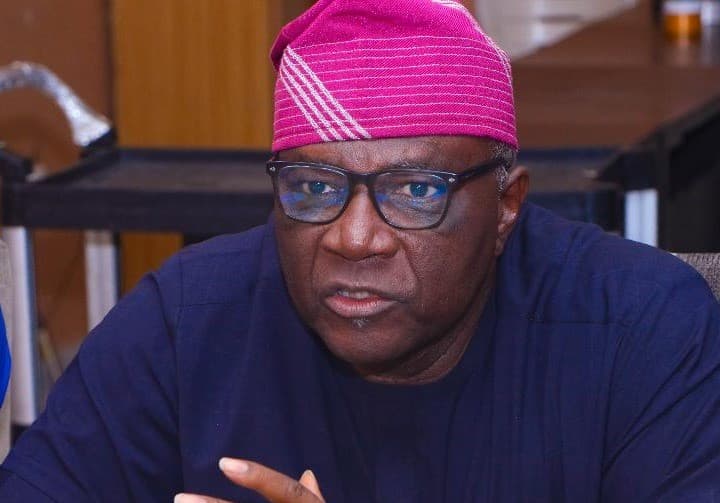
The battle over President Bola Tinubu’s Independence Day address has taken a fresh turn, with his Special Adviser on Information and Strategy, Bayo Onanuga, accusing some politicians of preparing their responses before the President even delivered his speech. Onanuga fired back after several opposition figures criticised Tinubu’s October 1 address, which focused heavily on the […]
The battle over President Bola Tinubu’s Independence Day address has taken a fresh turn, with his Special Adviser on Information and Strategy, Bayo Onanuga, accusing some politicians of preparing their responses before the President even delivered his speech.
Onanuga fired back after several opposition figures criticised Tinubu’s October 1 address, which focused heavily on the government’s economic reforms and its claim that Nigeria is moving towards an era of prosperity.
According to the presidential aide, some of those who attacked the speech were not genuinely reacting to its contents because they had already prepared what they intended to say before the President addressed the nation.
Onanuga argued that the critics failed to acknowledge what he described as a central point in Tinubu’s message: that the administration’s reforms were introduced to confront problems that existed in the economy rather than create them.
Tinubu had defended the removal of fuel subsidy and other economic measures, presenting them as difficult decisions aimed at addressing longstanding weaknesses and putting the country on a different path.
The President also maintained that Nigeria had moved beyond the phase of what he described as “emergency treatment” and was now positioned to pursue shared and widespread prosperity.
But the speech immediately drew criticism from opposition figures, who questioned whether the reported economic gains had translated into meaningful relief for ordinary Nigerians.
Atiku Abubakar, Peter Obi and other opposition voices challenged aspects of the President’s assessment, particularly over the cost of living, the impact of economic reforms and the conditions facing households.
The contrasting reactions have further intensified the debate over Tinubu’s economic policies, with the Presidency defending the reforms as necessary while critics continue to demand clearer evidence of their impact on Nigerians.
Onanuga’s response has now added another layer to the political argument, shifting attention from the content of the President’s address to the timing and nature of the reactions that followed it.
The exchange comes as Tinubu’s administration continues to defend its reform agenda, while opposition politicians insist that the success of the policies should ultimately be measured by improvements in the daily lives of Nigerians.